By: Syed Sardar M Khondai / ANI
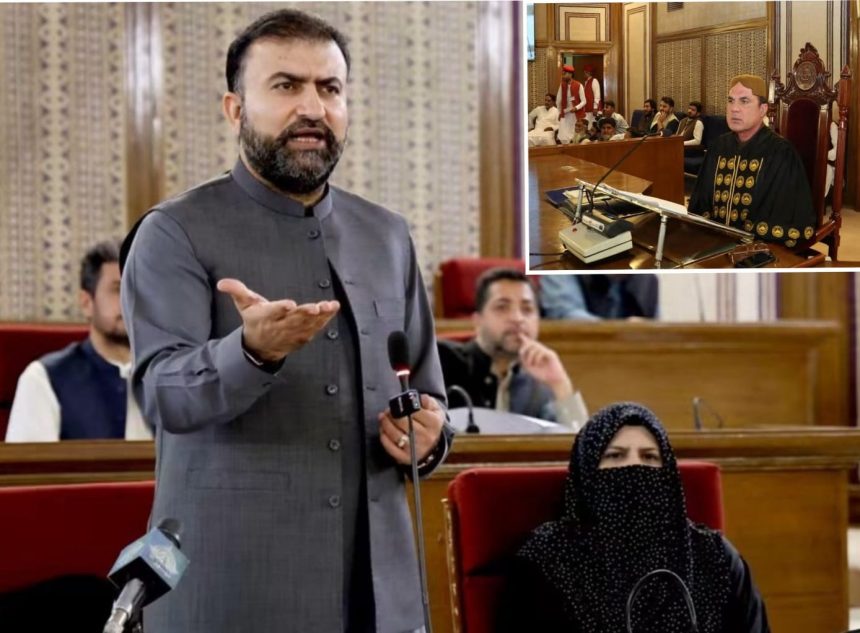
QUETTA — Balochistan Chief Minister Mir Sarfraz Bugti, while speaking in the Balochistan Assembly, said the state cannot under any circumstances leave citizens, security personnel or law enforcement agencies at the mercy of terrorists.
Responding to a point of order raised by the Leader of the Opposition, Bugti said maintaining a civil-military balance in Balochistan was essential for ensuring peace. He said security forces were currently operating in a “grey zone” and must be provided an enabling environment to effectively combat terrorism.
The Chief Minister strongly condemned attacks on security personnel, saying words were insufficient to describe the brutality involved in the martyrdom and burning of soldiers. He also expressed grief over the death of a captain who left behind a six-month-old daughter.
Private Properties and Terrorist Use
Clarifying his earlier remarks, Bugti said the government had never asked citizens to take up arms against terrorists. “It is the job of the Army, FC and Police to fight. The job of the public is only to inform,” he said.
He stated that if private property, including a garden, hotel or shop, is being used as a bunker or launching pad by terrorists, the state cannot remain silent. He said property owners would be required to provide information if their premises were being used for such purposes, warning that failure to report could lead to the person being considered a facilitator.
Shor Parod Operation, Mastung Not Included
Regarding reports of displacement, the Chief Minister clarified that no village in Balochistan had been permanently vacated to date and that Mastung was not part of the current plan.
He said Shor Parod is a mountainous area where fugitive camps have existed since 1970. Around 1,000 nomadic residents there may be temporarily relocated as part of a plan that is still at the planning stage. He assured that the government would protect the dignity and welfare of the affected people, particularly women, children and elderly citizens.
Dialogue or Effective Counter-Terrorism Operations
Bugti said there were two possible ways to address the conflict. The first was dialogue, adding that if anyone could present a workable negotiated solution, the government would welcome it.
The second option, he said, was to make “warfare and lawfare” effective through intelligence-based operations by the military, Frontier Corps, police and Counter Terrorism Department.
He concluded that the Constitution guarantees rights along with responsibilities and called on citizens not to allow their private properties to be used by terrorists, warning that the state’s patience has limits.