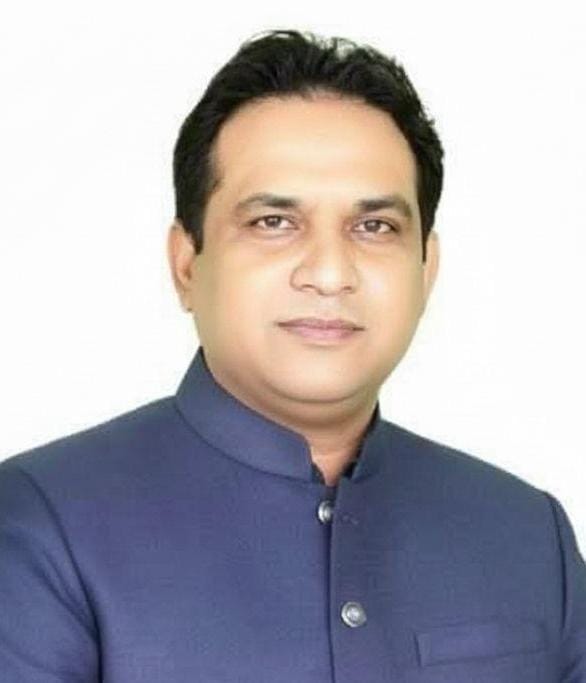
Written By:Rana Farooq Ashraf
Published By:ANI News Agency
The Pakistan Peoples Party’s problem in Punjab is not simply its dwindling number of seats or disappointing electoral performance. The real crisis runs deeper: the party is losing its organisation, political presence and, most importantly, the confidence of its workers.
I do not write this as a political opponent. I write as someone who has spent 26 years as a worker of the Pakistan Peoples Party. I have followed the politics of Benazir Bhutto closely, witnessed the loyalty of PPP workers through difficult times, and remained associated with the party because I believed that the PPP was more than an electoral symbol. It represented a political tradition rooted in democracy, social justice and the rights of ordinary people.
That is precisely why this letter is not easy to write.
But the most dangerous moment for a political party is not when it is criticised. It is when its workers fall silent. In Punjab, that silence is becoming increasingly visible.
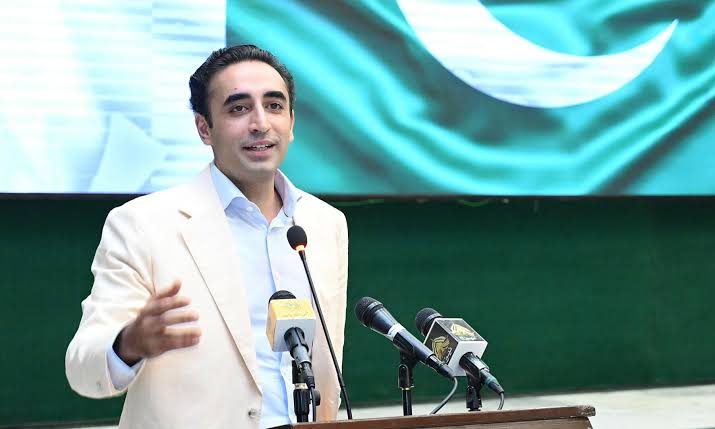
There was a time when saying, “I am a PPP worker,” carried a political identity of its own. Today, the same statement is often met with a question: “You are still with the PPP?”
Many workers still respond: yes, because we continue to believe in Bilawal Bhutto.
But faith in leadership becomes political strength only when an organisation can translate that faith into political activity, public engagement and electoral relevance.
This is where Punjab’s fundamental problem lies.
Workers increasingly complain about organisational inactivity, internal divisions, limited public engagement and the absence of meaningful access to leadership. Not every complaint may be justified, and factionalism and personal differences exist in every political organisation. But when such complaints become widespread and persistent, they become a political fact that leadership cannot afford to ignore.
There is also a growing perception that organisational positions are sometimes awarded on the basis of personal loyalties or group preferences rather than political performance, public acceptance and organisational ability. When hard work no longer creates a path towards responsibility, a worker first becomes silent, then inactive, and eventually walks away.
The second challenge is the party’s political ambiguity.
The PPP criticises the policies and governance of the Pakistan Muslim League-Nawaz, yet at the same time works with it politically. Political compromise is a legitimate part of democratic politics. But compromise also requires clarity.
A worker who has to present the PPP to voters as an alternative to the PML-N is left struggling to explain sudden shifts in political cooperation. Leadership can change strategy. The worker, however, remains in the same village, the same neighbourhood and the same constituency, facing the same voters.
The party therefore needs a clear political charter for Punjab.
Its position must be unmistakable on inflation, agriculture, employment, education, healthcare, local government, governance and its political relationship with the PML-N. Punjab’s voters need to know not merely what the PPP opposes, but what it stands for.
This is no longer the time for statements alone. It is time for organisational reform.
Every district, tehsil and city organisation in Punjab should undergo a 90-day performance audit. Political activity, membership mobilisation, public outreach, worker engagement and constituency-level performance should be assessed. Inactive organisations should be restructured, while those demonstrating political performance should be given greater responsibility.
An independent Workers’ Complaints and Accountability Cell should be established under the Chairman’s office. Workers must be able to raise genuine concerns without fearing that their complaints will simply return to the same local structures against which they have complained.
The party should also hold a genuine Punjab Workers’ Convention—not merely a gathering of office-bearers. Long-serving workers, young activists, silent workers and even former PPP workers should be invited.
Ask them one simple question:
Why did you leave?
And this time, the leadership should listen rather than defend itself.
There must also be transparent criteria for organisational appointments: political performance, public credibility, organisational ability, integrity and the capacity to build teams. Loyalty deserves respect, but loyalty alone cannot be the only qualification for leadership.
And above all, Bilawal Bhutto, you need to come to Punjab.
Not merely for rallies or formal meetings, but to sit among the workers themselves.
Meet those who have stood with the party for two or three decades. Meet those who have left. Visit constituencies where the PPP flag once represented a powerful political identity and where today its presence is barely visible.
Some of what you hear may be uncomfortable. But the real test of leadership is not the ability to listen to praise. It is the ability to listen to uncomfortable truths.
Bilawal Bhutto, Punjab is not just another province for the PPP. It is central to the party’s historical identity and indispensable to any serious national political comeback.
You have the Bhutto name, Benazir Bhutto’s legacy and an opportunity to lead the party into a new political era. But without rebuilding the party in Punjab, a strong return to national politics will remain difficult.
And in Punjab, the most important bridge between the party and the people is the worker.
That worker is not your enemy.
He may not even be angry.
He is disappointed.
And when disappointment turns into silence, political parties begin to hollow out from within.
It is not too late.
The flag is still in the worker’s hands. Bhutto’s name still carries meaning. Benazir Bhutto’s memory still lives in millions of hearts. And a younger generation is still looking for politics that is democratic, clear and genuinely responsive to ordinary people.
So, Mr Bhutto, take this letter not as an accusation but as an internal warning.
The door is still open.
The worker is still waiting.
But if that voice continues to be ignored, history may not say that the PPP lost Punjab to its political opponents.
It may say that the PPP lost Punjab on the day its own workers lost hope.