

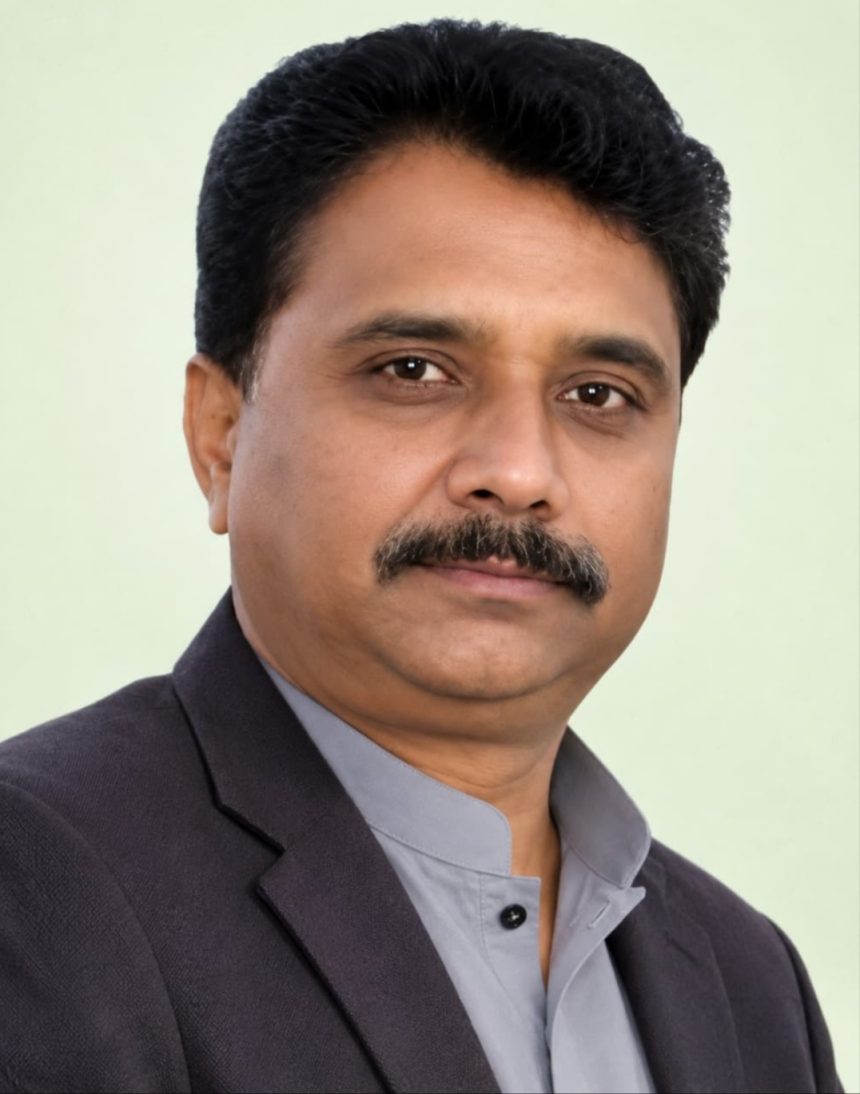
By Ch Shabbir Balochistani : Published by ANI
Pakistan today stands at a political crossroads where the most important question is not which political party will win the next battle for power. The real question is whether we are prepared to leave the next generation with the same political confrontation, institutional friction and uncertainty that have shaped our political landscape for decades.
This question is particularly important because Pakistan has, in the past, found a way out of political crises through dialogue and consensus—and has witnessed the results. The problem is not that we lack a way forward; the problem is that, despite repeatedly seeing the path, we have failed to remain committed to it.
What Pakistan needs today is not another political confrontation, but a new political direction.
The government and the opposition must decide whether they will continue to spend their energies trying to bring each other down, or sit together to strengthen Pakistan. Dialogue will not eliminate political differences, but it can prevent those differences from turning into hostility. Reforms can ensure that a change of government does not become a crisis for the system. And a national charter can ensure that changes in government do not repeatedly alter the fundamental direction of the state.
The Charter of Democracy Already Showed Us the Way
A significant moment in Pakistan’s political history came on May 14, 2006, when former Prime Minister Benazir Bhutto and former Prime Minister Nawaz Sharif, despite their deep political differences, signed the Charter of Democracy.
The fundamental lesson of that agreement was that political parties could establish common democratic principles instead of seeking to eliminate one another from the political arena.
But the real significance of the Charter of Democracy was not merely the signing ceremony. Its true test came when that political consensus was translated into practical constitutional reforms.
According to the official record of the National Assembly, a parliamentary committee was constituted in 2009 to formulate constitutional reforms in the light of the Charter of Democracy. The committee held 77 meetings, undertook extensive consultations, submitted its report, and the process ultimately led to the passage of the 18th Constitutional Amendment by the National Assembly and the Senate.
This remains one of the most important lessons in Pakistan’s political history:
Consensus is possible despite differences—and political consensus can be transformed into law and constitutional reform.
So why not today?
Why Does Pakistan Need a New National Charter?
Because Pakistan needs more than changing governments. It needs continuity of governance and policy.
We need a political system in which a change of government does not automatically change national economic policy; development projects do not come to a halt with every transfer of power; political disagreements do not turn into personal enmity; and the direction of state institutions is not repeatedly disrupted by political transitions.
A new Charter for Pakistan should, at the very least, rest on five fundamental pillars:
Free and credible elections, a strong Parliament, an independent judiciary, empowered local governments, and consistent economic policies.
Without consensus on these five areas, political stability will remain little more than an aspiration.
The Verdict of the Ballot Must Be Final
The basic principle of democracy is simple: those whom the people elect should be given the opportunity to govern, while those who are rejected at the ballot box should sit in opposition.
But for this principle to work, both the government and the opposition must have confidence in the electoral process.
Pakistan needs electoral reforms that command agreement before elections and retain credibility after the results are announced. Elections must cease to be a recurring source of political conflict and instead become a reliable mechanism for the peaceful transfer of power.
If public confidence in the ballot is restored, many of the recurring crises of the democratic system can be reduced considerably.
Parliament Must Truly Be Empowered
Parliament is not merely a place where laws are passed. It is the institution through which elected representatives determine the direction of the state.
The government must remain answerable to Parliament, while the opposition must also use parliamentary forums effectively.
Pakistan needs a parliamentary culture in which the government does not treat every disagreement as a conspiracy, and the opposition does not describe every government decision as a failure.
Democracy does not mean unconditional support for the government. But neither does it mean unconditional opposition to everything the government does.
Where the national interest demands support for the government, the opposition should stand with it. Where the government is wrong, a strong and responsible opposition is essential to democracy.
Article 140-A: From the Constitution to the Ground
Local government remains one of the most neglected subjects in Pakistan’s political debate, despite the fact that Article 140-A of the Constitution requires provinces to establish local government systems and devolve political, administrative and financial responsibility and authority to elected local representatives.
This raises a fundamental question:
If power does not travel from Islamabad to the provincial capitals, and from the provincial capitals to the district and local levels, where does democracy reach the ordinary citizen?
Why should an ordinary citizen have to visit the offices of ministers and senior bureaucrats for water, sanitation, roads, drainage, basic healthcare or local development?
A new Charter for Pakistan should treat local government not as a periodic electoral exercise but as a constitutional responsibility, backed by a clear and enforceable implementation timeline.
Balochistan Must Be Seen as Part of the Solution, Not Merely as a Problem
At this point, Balochistan’s place in the national conversation is indispensable.
Viewing Balochistan’s challenges solely through the lens of law and order would be a serious mistake. The people of any province need more than roads and development projects. They also need respect, representation, justice, employment and a meaningful role in decision-making.
Political dialogue is essential to strengthening trust between the state and the people of Balochistan.
Political parties, young people, intellectuals, tribal and social leadership, and civil society in Balochistan must be given a genuine voice in the national dialogue.
A clear national policy is also required on the fair distribution of resources, employment opportunities, education, healthcare, infrastructure and the future of the province’s youth.
This is precisely where a Charter for Pakistan can be translated from an idea into practical action.
The Economy Needs a Fifteen-Year Vision, Not a Five-Year Government
One of Pakistan’s major economic challenges is the lack of policy continuity.
One government introduces a policy, the next changes it, and another government alters it again. Investors wonder what the next government will do; industrialists remain uncertain about tax policy; and young people continue to ask where sustainable employment opportunities will come from.
This uncertainty is dangerous for any country.
Political parties should therefore agree on a 10-to-15-year national economic charter.
Policies concerning taxation, energy, exports, industry, agriculture, information technology, education, skills development and youth employment should be designed in a way that protects them from abrupt changes with every transfer of power.
Pakistan does not merely need a new government.
Pakistan needs policy continuity.
Accountability Must Not Become Political Revenge
There should be no disagreement over the need for accountability in Pakistan.
But accountability becomes meaningful only when the same standards apply to everyone.
If those in government are effectively shielded from accountability while those in opposition are constantly placed under scrutiny, accountability itself becomes indistinguishable from political victimisation.
The new national charter should therefore establish one clear principle:
There can be no concession on corruption, but political disagreement must never be treated as a crime.
The law must be equal for everyone—those in government and opposition, the powerful and the weak, the rich and the poor.
National Dialogue Must Go Beyond Politicians
Another pressing need is to ensure that national dialogue does not remain confined to parliamentary meetings or political leaders.
Alongside the government and opposition, constitutional experts, economists, business leaders, young people, women, the media, universities, civil society and representatives of the provinces should also be part of the process.
Pakistan could establish a permanent National Political and Constitutional Dialogue Forum, tasked with presenting its recommendations to Parliament every year.
Separate working groups could focus on electoral reforms, the economy, the judiciary, federal-provincial relations, local government, national security and the challenges facing Balochistan.
But this process must not become another photo opportunity.
It must produce a practical national roadmap.
The Real Question Is Not Power—It Is the State
Pakistan must accept one difficult reality:
If every political party comes to power with the objective of eliminating its opponents, no government will ever be able to create lasting stability.
Those who are in government today may be in opposition tomorrow.
Those who are in opposition today may form the government tomorrow.
Therefore, the rules must not be designed for individuals or political parties. They must be designed for everyone.
That is the essence of democratic maturity.
Pakistan needs a political system in which a transfer of power does not mean the collapse of continuity, but rather the continuation of the system itself.
Political leaders in the past managed to sign the Charter of Democracy despite deep disagreements. Constitutional reform subsequently moved forward, resulting in significant developments such as the 18th Amendment.
We therefore already possess historical evidence that political consensus is not impossible.
What is required today is the political will to learn from that experience.
Pakistan does not need another political war.
Pakistan needs a new political direction.
A direction where there is dialogue, but not weakness.
Reform, but no political engineering.
Accountability, but no political revenge.
Elections, but with confidence rather than perpetual controversy.
Devolution of power, without weakening the state.
Provincial rights, alongside a stronger federation.
And above all, a political culture in which an opponent is not treated as an enemy, but as the other side of the democratic process.
This is where the need for a new Charter for Pakistan becomes undeniable.
It should belong to no single political party, government or personality.
It should belong to the people.
It should belong to the Constitution.
It should belong to democracy.
And above all, it should belong to Pakistan.
Because the generations to come will not ask us which political group won in 2026.
They will ask us something far more consequential:
When Pakistan needed political stability, economic continuity and national consensus, what did you choose to do?
The decision is in our hands.
Confrontation or dialogue?
Political revenge or the rule of law?
Temporary interests or enduring national policy?
And above all—politics for power, or politics for Pakistan?
The answer of our time is clear:
Pakistan needs a new political direction.



I really appreciated reading this column. It reflects many of the concerns that people genuinely have about the direction of our politics and the need for a more mature, constructive approach.