BY: FT Correspondent:
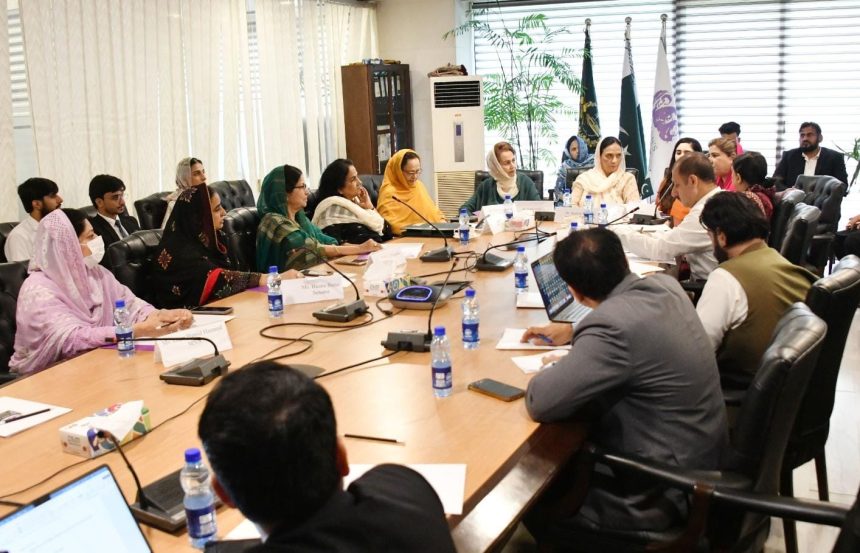
ISLAMABAD — The Women’s Parliamentary Caucus (WPC) of the National Assembly, under the chairpersonship of its Secretary Dr. Shahida Rehmani, MNA, in collaboration with Resource and Support Hub (RSH) Pakistan, held a Focus Group Discussion on Gender-Responsive Budgeting (GRB) at the WPC Secretariat, Parliament House, Islamabad.
The consultation brought together Members of Parliament and representatives of RSH Pakistan to discuss strengthening gender-responsive financing, budget tracking, parliamentary oversight and accountability, particularly in relation to gender-based violence, safeguarding and protection.
Secretary WPC Dr. Shahida Rehmani stressed that Gender-Responsive Budgeting should not be treated merely as a technical exercise. She said Parliament must ensure that gender-related legislative commitments are adequately financed, effectively implemented and translated into meaningful outcomes for women and girls.
She also highlighted the need to examine the complete accountability chain, from budget allocation and release to expenditure, service delivery, implementation and parliamentary scrutiny.
Members of the National Assembly called for a strong mechanism to monitor gender-responsive budget allocations in every ministry and department. They proposed appointing a designated focal person for gender budgeting in each ministry and department to facilitate coordination, monitoring, reporting and implementation of gender-tagged allocations.
The members also emphasised the need to sensitise Chairpersons of Standing Committees on Gender-Responsive Budgeting so that gender considerations receive due attention during deliberations on ministry-wise budgets, policies, programmes and performance.
Another key recommendation was to ensure appropriate representation of women in public-sector schemes, programmes and departmental initiatives. Members proposed that a women’s quota or defined participation target be incorporated, where appropriate, to ensure women benefit equitably from public resources and development programmes.
RSH Pakistan Country Lead Asma Kiran highlighted the importance of strengthening safeguarding systems, prevention of gender-based violence and protection from sexual exploitation, abuse and harassment.
The discussion also focused on improving the visibility, traceability and accountability of gender- and GBV-related expenditure through clearer budget information, institutional responsibility mapping, expenditure tracking and stronger parliamentary follow-up.
Participants agreed that effective Gender-Responsive Budgeting requires a practical mechanism linking legislative commitments with budget allocations, implementation, expenditure and measurable results.
The consultation concluded with a call for stronger coordination among Parliament, ministries, Standing Committees and technical partners to improve gender budget monitoring and ensure public resources effectively respond to the needs and priorities of women and girls.
The Women’s Parliamentary Caucus reaffirmed its commitment to continued engagement on Gender-Responsive Budgeting, parliamentary oversight and accountable public financing.