By: Rana Farooq Ashraf
Published By ANI
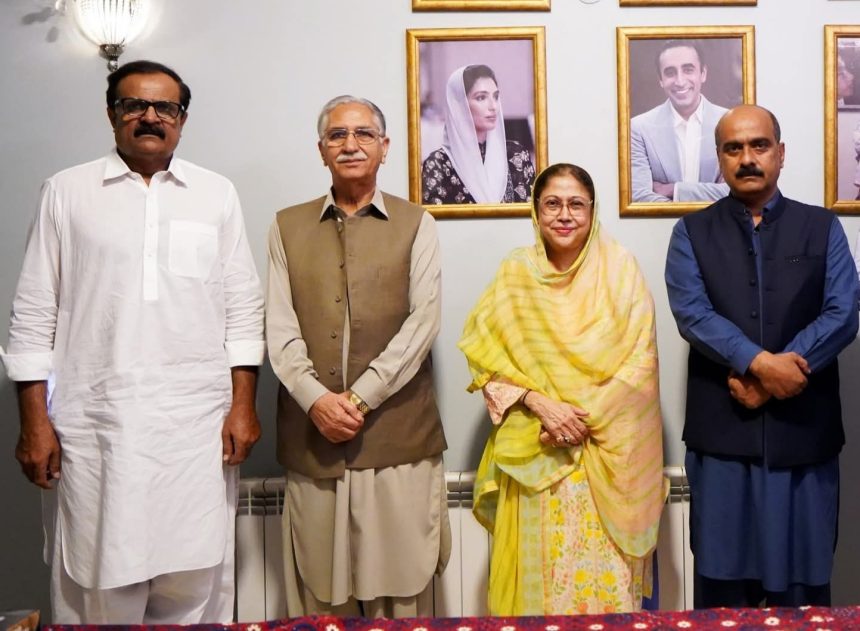
My recent meeting with Chaudhry Muhammad Asif Gujar, the Pakistan Peoples Party (PPP) candidate for the Azad Jammu and Kashmir Legislative Assembly constituency LA-35, shed critical light on the structural fault lines plaguing grassroots political organization. During our detailed discussion, Mr. Gujar shared the core points of the comprehensive electoral report he recently submitted to PPP Chairman Bilawal Bhutto Zardari at Zardari House, Islamabad. Having personally accompanied him across Daska during the thick of the campaign, many of the operational failures and administrative bottlenecks he highlighted were not mere hearsay to me; they were glaring realities I witnessed firsthand on the ground.
At the heart of Asif Gujar’s report lies a fundamental question that transcends simple electoral arithmetic: what was the actual role, efficacy, and accountability of the party’s organizational machinery? Constituency LA-35 is a sprawling and geographically diverse territory encompassing the tehsils of Daska, Sambrial, and Pasrur in Sialkot District, alongside parts of Gujranwala and Hafizabad. In a constituency of this scale, a candidate’s electoral viability cannot rest solely on personal outreach or individual stamina. It demands meticulous strategic planning, synchronized coordination among district, tehsil, and city wings, the active mobilization of ideological cadres, robust election-day management, and continuous, unyielding contact with voters right up to the closing hours of polling.
According to the candidate’s findings, the Sialkot district organization fell woefully short of fulfilling these foundational responsibilities. Serious and probing questions must be directed, first and foremost, toward District President Azhar Dayal. In a constituency directly absorbing three major tehsils of Sialkot, basic organizational prudence dictated that the district president maintain a constant, working liaison with the candidate, convene regular weekly reviews, delegate clear mandates to tehsil chapters, and spearhead foolproof polling-day preparations. Yet, the ground reality presented a starkly different picture. Regular meetings were sidelined, tehsils were left without clear directives, comprehensive polling-station planning was non-existent, and, most damagingly, the district president himself remained conspicuously absent from the core campaign trail.
A stark contrast, however, emerged at the local level in Daska. The PPP tehsil and city presidents in Daska immersed themselves fully in the candidate’s campaign, galvanized local workers, and discharged their structural duties with admirable dedication. This local resilience underscores a vital political truth: even under constrained resources, a motivated and sincere grassroots organization can substantially fortify an electoral bid. Unfortunately, legitimate grievances regarding organizational indifference or apathy echoed from Sambrial, Gujranwala, and Hafizabad as well, where local dynamics were mishandled and brushed aside under the guise of routine political differences.
Yet, the most sensitive, confounding, and alarming chapter of the LA-35 election narrative revolves around the final, decisive days of the campaign. Approximately forty-eight hours prior to polling, a major public rally was scheduled to take place in Daska, with Punjab Governor Sardar Saleem Haider Khan down to address the gathering. At a juncture when a political campaign must marshal its final reservoirs of momentum, energize the voter base, and deliver a resounding closing message, the abrupt and mysterious cancellation of such a high-profile event is by no means a trivial administrative glitch.
The report explicitly points toward Hasan Murtaza’s alleged intervention behind the sudden termination of the Governor’s participation and the subsequent collapse of the rally. A thorough, transparent inquiry is urgently required to establish at what level this decision was engineered, what motivations dictated it, and how profoundly this engineered disruption demoralized the candidate, local organizers, and the ideological workers on the ground.
This specific controversy forces open a much broader, systemic question that has lingered within party ranks for years: why does Hasan Murtaza’s name perpetually surface amidst internal organizational disputes, arbitrary decision-making, and persistent political friction?
This discontent is no longer isolated to a single constituency or a localized by-election. Across the provincial party structure, a profound sense of alienation has taken root among veteran, loyal, and ideologically driven workers. A persistent grievance shared across party echelons is that long-term political struggle, personal sacrifice, and genuine grassroots connectivity are routinely sidelined. Workers who have stood by the party through its most difficult historical trials feel systematically marginalized, while key administrative levers are tightly locked within an insular grip. When capable, popular, and active regional leaders are boxed out of the decision-making apparatus, the natural consequence is political stagnation and organizational decay.
The time has arrived for the party high command to initiate a rigorous, objective assessment of Hasan Murtaza’s administrative role, his appointment mechanisms, and his overarching influence on electoral strategies across Punjab. If administrative choices and organizational directives can withstand open scrutiny, transparency will vindicate them. However, if evidence points toward an abuse of authority, systematic favoritism, the sidelining of sincere workers, or the deliberate subversion of grassroots campaigns, immediate corrective discipline must be enforced. The party cannot afford to let its structural machinery remain hostage to individual gatekeeping.
The Pakistan Peoples Party is not the fiefdom of any single individual; it remains an enduring trust founded upon the blood of martyrs, the sacrifices of its ideological workers, and the collective aspirations of the masses. The post-election realities of LA-35 must not be brushed aside as a routine electoral loss. Chairman Bilawal Bhutto Zardari must demand a comprehensive, unvarnished accounting of organizational performance across Sialkot, Sambrial, Daska, Pasrur, Gujranwala, and Hafizabad. Every actor involved in the final phase of decision-making must be held to account.
Ultimately, the lesson of LA-35 is stark: the blame for electoral setbacks cannot be conveniently offloaded onto the candidate alone while organizational architects of failure sit shielded from inquiry. True organizational strength flows from accountability, inclusion, and respect for the party’s bedrock—its workers. The central leadership must now decide whether institutional standards of justice and merit will apply universally, or if unchecked administrative power will permanently eclipse the voices of those who keep the party alive in the field.