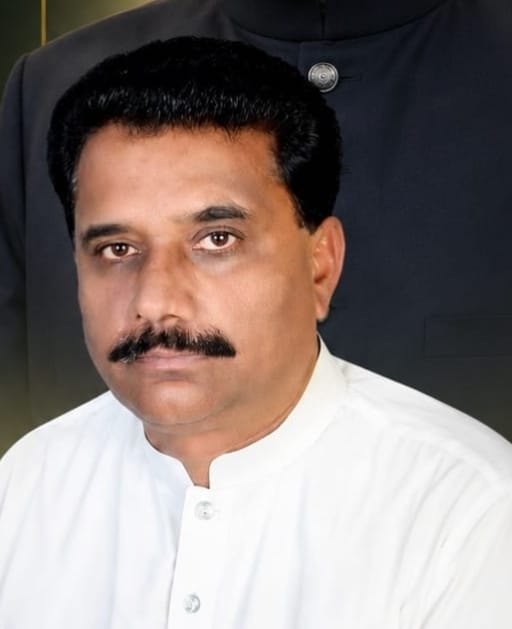
By Ch Shabbir Balochistani : Published by ANI
The signing of the historic defence agreement between Pakistan, Türkiye and Saudi Arabia is not merely a diplomatic formality; it marks the emergence of a new strategic reality in a rapidly changing global political landscape. The agreement reflects a growing convergence among major Muslim countries to strengthen cooperation for the protection of their collective defence, security, sovereignty and mutual interests. Its significance extends far beyond the military sphere and is likely to have an impact on Pakistan’s diplomacy, regional politics, the collective role of the Muslim world and the response of major global powers in the days ahead.
For Pakistan, this is a moment of exceptional importance. At a time when the world is witnessing the emergence of new centres of power and evolving strategic alliances, Pakistan has further enhanced its defence capabilities and diplomatic relevance. A formal defence partnership with Türkiye, a strong regional power, and Saudi Arabia, an influential Muslim state, strengthens Pakistan’s position not only as an important South Asian country but also as an increasingly influential player in the Muslim world and international diplomacy.
Prime Minister Muhammad Shehbaz Sharif and Field Marshal Syed Asim Munir deserve appreciation for this historic development. The growing coordination between the political and military leadership on matters of national interest has created an opportunity for Pakistan to translate its defence strength into broader diplomatic influence. The agreement also demonstrates the confidence that friendly countries have placed in Pakistan’s defence capabilities, strategic importance and resilience in difficult circumstances.
The most significant message of this agreement is that Pakistan is no longer merely a reactive player in international politics. It is increasingly in a position to shape partnerships according to its national interests and regional priorities. Pakistan, Türkiye and Saudi Arabia are three countries of exceptional political, defence, economic and geographical importance in their respective regions. If their capabilities are effectively integrated, the partnership could extend far beyond military cooperation and open new avenues in trade, investment, defence production, technology, energy and economic development.
However, this opportunity calls for taking one step further. Alongside defence cooperation, Pakistan, Türkiye and Saudi Arabia should consider establishing a comprehensive framework for joint research in science and technology, artificial intelligence, space exploration, biotechnology, advanced medicine, energy, defence technologies, semiconductors, robotics and other emerging fields. Such an initiative could give a new and historic dimension to the existing defence partnership.
The three countries should seriously consider establishing a Pakistan-Türkiye-Saudi Arabia Science and Technology Research Commission. Under such a framework, universities, research institutions, scientists, engineers, technology companies and defence research organisations from all three countries could work together on joint projects. A common research fund could be established, scholarships and exchange programmes could be launched for young scientists, joint laboratories and research centres could be created, and priority could be given to technologies that will shape global power and economic development in the coming decades.
This is where the real competition of the future will take place. In the coming world, the most powerful nations will not necessarily be those possessing the most sophisticated weapons alone; they will be the countries that achieve leadership in artificial intelligence, quantum computing, space technology, biotechnology, advanced energy, cyber technology and industrial research. If Pakistan, Türkiye and Saudi Arabia begin joint investment and research in these fields today, they can not only address their own national needs but also open a new scientific and technological path for the Muslim world.
Such an initiative could lay the foundation for transforming defence cooperation into a broader scientific, technological and economic partnership. Türkiye’s industrial and defence technology, Pakistan’s human capital and scientific and engineering capabilities, and Saudi Arabia’s financial and investment strength, if brought together on a common research platform, could produce extraordinary results. The objective of this partnership should not be competition for the sake of competition with other nations, but the achievement of scientific self-reliance, technological sovereignty and sustainable economic development.
For the Muslim world, this could prove to be a genuine turning point. Historically, Muslim civilisation led the world in fields such as medicine, mathematics, astronomy, philosophy and scientific thought. The need today is for Muslim countries not merely to remain consumers of technology but to become creators of technology. If three major Muslim countries take the first significant step in this direction, other Muslim states could also join the research and scientific network, gradually paving the way for a broader platform of Islamic scientific and technological cooperation.
Another important message of the agreement is that the purpose of strong defence is not war but the protection of peace, sovereignty and stability. If defence cooperation is linked with knowledge, science, technology and economic development, the partnership can become a positive initiative aimed not against anyone, but in favour of a secure and prosperous future for the participating nations.
For Pakistan, the real challenge now is to translate the agreement into tangible outcomes. Diplomatic success becomes a national achievement only when it brings investment, industrial development, technology transfer, employment opportunities, increased trade and greater economic strength. Saudi Arabia’s investment potential, Türkiye’s industrial and technological expertise, and Pakistan’s defence and human-resource capabilities, if brought together under a common framework, could play a significant role in transforming Pakistan’s economic and scientific prospects.
Major global powers will also view this agreement as a new diplomatic reality. Cooperation among Pakistan, Türkiye and Saudi Arabia could influence the regional balance of power and enhance the collective importance of the three countries in international diplomacy. Pakistan’s wisdom lies in using this new position through a balanced, independent and proactive foreign policy rather than becoming entangled in bloc politics.
For Pakistan, this agreement represents the beginning of a new era of confidence. The world has received a clear message that Pakistan possesses not only strategic geography, nuclear capability and a strong defence system, but also regional and global partners that recognise its potential and importance. The time has now come to transform this defence achievement into a broader vision encompassing science, technology, economic development and human progress.
The defence agreement signed between Pakistan, Türkiye and Saudi Arabia is undoubtedly a milestone, but the road beyond this milestone is even more important. If the three countries subsequently establish a joint Science and Technology Research Commission, a common research fund and advanced joint research centres, it would not merely be a success for three nations; it could become a historic turning point for the entire Muslim world.
The wars of the future will not be fought only on borders. The real competition will increasingly take place in knowledge, research, artificial intelligence, space technology, advanced medicine, energy and industrial innovation. The nations that invest in research today will be the ones capable of shaping the direction of the world tomorrow.
Pakistan, Türkiye and Saudi Arabia have an opportunity before them that history does not offer repeatedly. If defence cooperation is transformed into scientific cooperation, scientific cooperation into technological self-reliance, and technological self-reliance into economic strength, this partnership could lay the foundation for a new era for generations to come.
This is not merely a defence agreement; it could become the starting point of a new strategic, scientific and economic journey for the Muslim world. If this opportunity is utilised with vision and foresight, Pakistan, Türkiye and Saudi Arabia can not only safeguard their own future but also help place the Muslim world once again on the path of knowledge, research, technology and self-confidence.