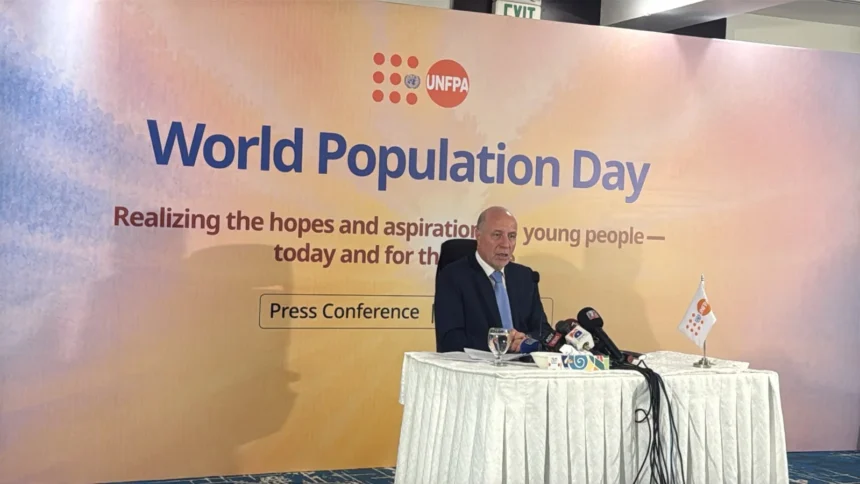
ISLAMABAD: The United Nations Population Fund (UNFPA), marking World Population Day, has called on Pakistan to place young people at the heart of its future planning, saying investment in youth is essential for a brighter and more stable future.
According to the report, Pakistan’s population has reached nearly 257.2 million, with one-third of the population falling between the ages of 10 and 24. The report noted that 76 per cent of young people in Pakistan expressed hope about the future, while 53 per cent remained worried due to security concerns, economic difficulties, inequality, and risks linked to health and the environment.
The report said rural youth, particularly girls, are unable to fulfil their aspirations because of limited access to the internet and digital facilities. It also called for effective measures to end child marriages.
Speaking at a press conference, UNFPA Representative Dr Luay Shabaneh said investment in education, health, nutrition and young people was indispensable for Pakistan’s bright and stable future. He said access to external markets and investment in skills would increase income and savings, improving living standards and overall prosperity.
Dr Shabaneh said Pakistan should focus on human resource development and provide young people with opportunities to use their potential. He described education as the foundation of development, prosperity and a strong future, adding that investment in youth is the guarantee of Pakistan’s brighter and more stable future.
This year’s World Population Day theme is “Fulfilling the hopes and aspirations of young people — today and for the future.” In line with the theme, UNFPA released a new global report, the Demographic Futures Survey.
The report, titled “Lives, Choices and Futures: What Young People Want and What Influences Their Decisions About Relationships and Parenthood,” is based on responses from more than 100,000 internet users aged 18 to 39 across 73 countries. UNFPA said it is among the largest bodies of evidence on how young people make reproductive choices.
The findings also showed a gap between the number of children people want and the number they actually have. In Pakistan, women have an average of 1.8 children but want 2.5, while men have 2.5 children but want 3.4. Men reported wanting more children than women.
The report further stated that 30 per cent of people aged 35 to 39 in Pakistan have no children, and 65 per cent among them want children.
UNFPA said World Population Day is a reminder that Pakistan’s future will be determined not only by population trends but also by the quality of decisions made today. The agency said it remains committed to working with the Government of Pakistan and other institutions to build a future where every pregnancy is wanted, every childbirth is safe, and every young person can realise their potential.