By: Hurish Shah
Published By:ANI News Agency
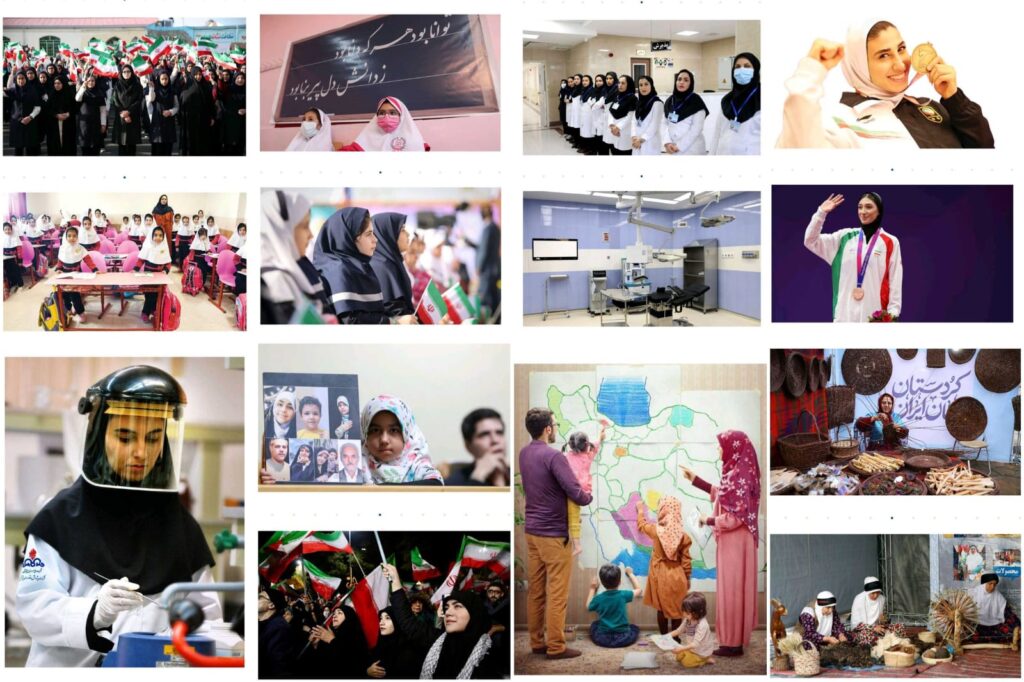
Women’s participation in education, healthcare, economic development and public administration is an important measure of a society’s progress. Across the world, governments are increasingly recognising that sustainable development requires women to have opportunities to acquire knowledge, develop professional skills, contribute to the economy and participate in decision-making.A report titled Women’s Progress: The Narrative of Today’s Iran, published by the Vice Presidency for Women and Family Affairs of the Islamic Republic of Iran, outlines the country’s stated efforts to strengthen women’s participation across several sectors. The report covers education, health, innovation, sports, leadership, social welfare, culture and the consequences of armed conflict.According to the document, Iran’s approach seeks to combine women’s empowerment with social welfare, family support and the protection of human dignity. Its figures present a picture of women’s expanding role in public life, although the reported statistics would benefit from independent verification and comparison with internationally recognised data.Education and Scientific AdvancementEducation is one of the central themes of the report. It identifies women’s access to schools, universities and scientific careers as a foundation for social and economic development.The document states that the literacy rate among women aged 10 to 49 has exceeded 96 per cent, while the gender gap in access to primary and secondary education has narrowed to less than three percentage points. It also reports that women account for approximately 52 per cent of university students and 46 per cent of doctoral students.These figures, if considered alongside measures of educational quality and equal opportunity, illustrate the potential contribution of women to research, innovation and professional life. The report further states that women constitute 62 per cent of the teaching workforce and hold half of senior school management positions.Women’s representation in scientific disciplines is another area highlighted in the publication. The document reports substantial female participation in the basic sciences and an increase in the number of women holding senior academic positions.However, educational participation is only one part of the picture. The long-term impact of education also depends on whether women can translate their qualifications into employment, research opportunities, professional advancement and leadership roles.Healthcare and Women’s Well-beingHealthcare forms another major pillar of the report. It highlights maternal health, reproductive healthcare, medical training and support services for women facing difficult circumstances.According to the document, women’s life expectancy in Iran has reached 78 years. It also reports that maternal mortality has declined to 16 deaths per 100,000 live births and that more than 98.5 per cent of births take place in hospitals or other standard facilities with skilled medical and midwifery assistance.The publication states that women account for 44 per cent of specialist physicians and 98 per cent of obstetricians and gynaecologists. These figures underscore the reported contribution of women to the country’s healthcare workforce.The report also describes services for women experiencing domestic violence, family crises and social vulnerability. These include safe shelters, psychosocial support, crisis intervention centres and programmes intended to help women develop skills and achieve economic independence.Such support is important because women’s well-being cannot be measured solely through medical indicators. Access to safe housing, legal protection, counselling, education and sustainable employment can also determine whether women are able to rebuild their lives and participate fully in society.Women in Leadership and Public AdministrationWomen’s representation in decision-making is another significant area addressed in the report. According to the document, more than 2,750 women have been appointed to executive bodies since the beginning of Iran’s 14th government.The publication also lists women serving as deputy ministers, directors-general, members of state-company boards, deputy governors, county governors, district administrators and mayors. It reports that more than 8,000 women have received specialised training in management and decision-making.These measures, as described by the report, indicate an effort to strengthen women’s administrative and leadership capacities.Nevertheless, representation should be assessed not only by the number of appointments but also by the authority attached to these positions, the opportunities available for advancement and the extent to which women can influence policy decisions. Creating an inclusive administrative system requires transparent recruitment, professional development and fair access to senior responsibilities.Economic Empowerment and Social ProtectionEconomic independence remains closely linked to women’s social standing and long-term security. The report identifies entrepreneurship, home-based businesses, cooperatives and access to employment as important components of its policy framework.Particular attention is given to women heading households, as well as women living in rural and nomadic communities. The document describes employment-loan guarantees, social security initiatives, microcredit funds and entrepreneurship training as mechanisms intended to strengthen economic participation.It reports that more than 60,000 women are members of rural and nomadic cooperatives and that entrepreneurship training reaches approximately 300,000 rural and nomadic women annually.The report also highlights skills training for women with disabilities and educational and rehabilitation services for children with disabilities.These initiatives address an important development challenge: women do not all face the same barriers. Rural communities, low-income households and women with disabilities may require different forms of assistance to access education, healthcare, employment and financial services.For support programmes to deliver lasting results, their effectiveness must be measured through indicators such as sustained employment, household income, access to finance and improvements in living standards.Culture, Sports and Social ParticipationBeyond education and employment, the report recognises women’s participation in culture, literature, media and professional sports.Women’s involvement in these areas contributes to the diversity of public discussion, the development of national talent and the representation of society’s experiences. Participation in sports can also support physical health, confidence, teamwork and professional opportunities.The document presents these fields as part of a broader effort to strengthen women’s role in national development. It also emphasises the relationship between women’s individual opportunities, family responsibilities and wider social participation.A sustainable approach requires institutions to create opportunities for women to develop their talents while ensuring that professional ambitions do not become incompatible with access to essential services, workplace protections and family support.The Human Cost of ConflictThe report also addresses the impact of military attacks described in the publication as the Ramadan War. It attributes extensive civilian casualties and damage to educational institutions, healthcare facilities and residential buildings to US-Israeli military attacks.According to the document, 517 women were among 3,519 civilians killed, while 5,046 women were among more than 30,000 people injured. It also reports damage to schools, universities, hospitals and other civilian infrastructure.These figures are claims presented in the report and require independent corroboration. Nevertheless, the broader humanitarian concern is clear: armed conflict can have devastating consequences for women and families, particularly when homes, hospitals, schools and essential services are damaged or destroyed.Women may face displacement, interrupted education, loss of income, inadequate healthcare and increased caregiving responsibilities during emergencies. Protecting civilians and maintaining access to humanitarian assistance are therefore essential to safeguarding human dignity and supporting recovery.Moving from Policy Commitments to Measurable ProgressThe report presents women’s advancement as a combination of education, healthcare, leadership, economic opportunity, cultural participation and social protection. Its central argument is that women should be recognised as contributors to national development rather than viewed solely as recipients of assistance.The next challenge is to ensure that policy commitments translate into measurable improvements in women’s everyday lives. Reliable statistics, transparent reporting, equal access to opportunities and independent evaluation can help establish which programmes are effective and where further action is needed.Women’s progress is not defined by a single statistic or the number of programmes announced. It is reflected in whether girls can complete their education, whether qualified women can pursue meaningful careers, whether vulnerable households receive effective support and whether women can participate in public life with dignity and security.As countries pursue sustainable development, women’s knowledge, skills and leadership remain valuable national resources. The experience outlined in Iran’s report provides a framework for examining these priorities, while independent evidence and continued assessment remain necessary to determine the extent of progress achieved.Ultimately, a society benefits when women have genuine opportunities to contribute to its scientific, economic, cultural and social future. Advancing those opportunities is not only a matter of representation; it is an essential part of building a more resilient and inclusive society.