By Zahid H. Karani / ANI
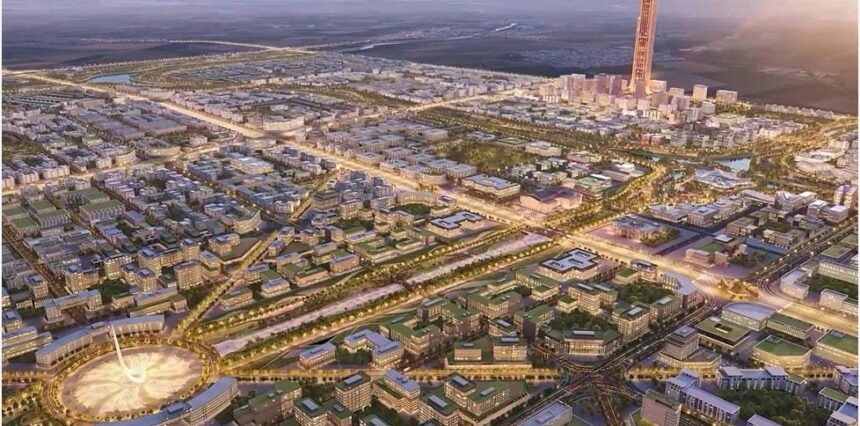
TASHKENT: Uzbekistan is developing New Tashkent, a major urban expansion project near the country’s capital, aimed at accommodating future population growth, strengthening economic activity and introducing modern infrastructure and environmentally sustainable urban planning.
The project covers approximately 20,000 hectares, with the first phase envisaging development across 6,000 hectares and planned investments of around $50 billion. The master plan includes residential and commercial buildings, educational institutions, public facilities and extensive green spaces.
According to the project details, approximately 2,000 hectares are earmarked for green spaces and 500 hectares for recreational parks. Plans also envisage 150 million square metres of residential and non-residential floor space, reflecting the scale of the proposed urban development.
Construction and infrastructure development worth approximately $2 billion have been reported to date. Several facilities have been developed, including residential buildings, university facilities, a library and an amphitheatre. Seven projects valued at a combined $1 billion have also been commissioned, according to the information provided.
These facilities include the first phase of the Sharq Bahori residential complex, road infrastructure, an electrical substation, a trigeneration plant, the Chamber of Commerce and Industry building, Sohil Park and a comprehensive school designed to accommodate 2,000 students.
The project is intended to extend beyond residential construction by creating an urban centre integrating business, education, healthcare, tourism and services. Its long-term development will depend on infrastructure expansion, investment, employment generation and the availability of essential public services.
By the end of 2026, 20,000 residential units are scheduled to be commissioned, with accommodation planned for at least 70,000 people. Supporting facilities, including schools, healthcare centres, sports complexes, commercial establishments and recreational spaces, are also part of the development plans.
A 55,000-seat stadium designed to meet FIFA requirements is another planned component, intended to support sporting events and increase the city’s capacity to host international gatherings.
The scale of New Tashkent reflects Uzbekistan’s broader urban development ambitions, with a focus on modern infrastructure, environmental planning and the creation of new economic opportunities. The project’s progress, investment implementation and delivery of public services will be important factors in determining its long-term impact on the capital region.