Why Separating Karachi and Hyderabad from Sindh Raises Serious Questions About Federalism, Economic Security and Historical Responsibility
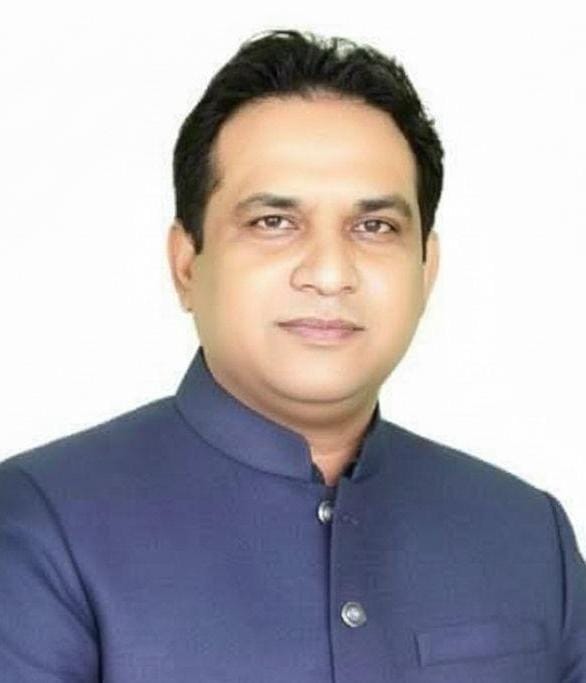
BY: Rana Farooq Ashraf: Published by ANI
History does not always repeat itself, but it certainly reminds nations of the consequences of forgetting their past. The debate over dividing Sindh and creating a separate province comprising Karachi and Hyderabad is not new. It has resurfaced periodically over the past several decades, raising fundamental questions about Pakistan’s federal structure, provincial autonomy and national cohesion. The central question is simple: why should the administrative problems of Karachi become an argument for dividing a historically integrated province?
Sindh is not merely an administrative territory. It represents an ancient civilisation, a distinct cultural identity and a historical legacy stretching back thousands of years. From Mohenjo-daro to the Indus River, Sindh possesses a geographical and civilisational identity that cannot be understood through contemporary political boundaries alone. Its rivers, coastline, agricultural lands, ports, language and shared historical experiences form an interconnected whole. Karachi is an integral part of this historical and geographical identity, not an isolated territory that can be separated according to changing political demands.
The Pakistan Peoples Party (PPP) has consistently opposed the division of Sindh. Its position is rooted in the belief that altering the province's geographical boundaries would have consequences beyond administrative restructuring and could undermine the delicate balance of Pakistan's federal system. Article 239(4) of the Constitution of Pakistan requires that any constitutional amendment affecting the boundaries of a province must be approved by at least two-thirds of the total membership of the concerned Provincial Assembly. This constitutional safeguard reflects the importance of provincial consent and autonomy.
There is no denying that Karachi faces serious administrative and developmental challenges. Water shortages, electricity, transport, sanitation, unemployment, infrastructure and municipal governance require urgent attention. However, these problems demand better administration, empowered local governments and transparent distribution of resources, not necessarily the creation of another province. Administrative failure should not automatically become a justification for geographical division.
The most sensitive aspect of this debate is Karachi's political history. The city experienced some of the darkest periods of urban violence, ethnic confrontation, extortion, targeted killings, kidnappings and political intimidation. The MQM emerged as a political voice representing genuine grievances and demands for the rights of the Muhajir community. However, serious allegations of violence, armed politics and intimidation were also associated with certain factions and elements linked to the party. These allegations and the historical record deserve an objective examination.
The memories of bodies found in gunny bags, extortion slips, threats and political killings remain among the most painful chapters of Karachi's history. Serious allegations regarding these practices were levelled against certain MQM factions and associated elements. Against this historical background, the renewed demand for separating Karachi and Hyderabad from Sindh raises legitimate questions. Can the people of Sindh simply forget those years? Can a city that suffered so deeply from ethnic polarisation and political violence afford another period of uncertainty? Political parties must be held accountable for their historical conduct, and no political organisation should be allowed to use ethnic identity as an instrument of division. At the same time, the responsibility for individual crimes must never be imposed on an entire community.
Another important dimension of this debate concerns Karachi's international commercial position and its historic port. Karachi was once among the region's important commercial and maritime gateways. However, political instability, industrial disruption, extortion, strikes, administrative weaknesses and an uncertain investment climate damaged the city's commercial reputation. During the same period, Dubai expanded its ports, free economic zones and modern commercial infrastructure to establish itself as a major international trading hub.
Some political observers have argued that Karachi's prolonged instability created opportunities for Dubai to strengthen its position as a regional commercial centre. Although Dubai's rise was also driven by strategic planning, international investment, infrastructure development and business-friendly policies, Pakistan must seriously examine the economic cost of Karachi's decline. Questions have repeatedly been raised about whether political interests and prolonged instability compromised Karachi's commercial potential. Any suggestion of a deliberate political conspiracy to benefit competing regional ports, however, requires credible evidence. What cannot be disputed is that Karachi's economic losses were ultimately Pakistan's losses.
This brings us to another fundamental question: if Karachi and Hyderabad are separated from Sindh, is there a credible political, administrative and economic roadmap for managing such a new province? Who will guarantee institutional stability, financial sustainability, law and order, water distribution and the management of strategic infrastructure? Karachi is not an ordinary urban centre. It is home to Pakistan's largest concentration of commercial activity, major industries and strategically important ports. Any prolonged political instability in Karachi could directly affect national trade, imports, exports and economic confidence.
There is a genuine danger that a new provincial arrangement, if created without political consensus and institutional safeguards, could generate fresh ethnic tensions, administrative confrontation and political instability. Pakistan has already experienced the consequences of prolonged political alienation, governance challenges and security-related difficulties in Balochistan. Does the country need another complex political crisis in a city as economically significant as Karachi? The comparison is not about equating the people or circumstances of Balochistan with Karachi; it is about recognising the dangers of allowing unresolved grievances and political confrontation to deepen into long-term instability.
The greatest concern is that Karachi's strategic importance, particularly its ports and contribution to the national economy, could become a source of political leverage. If a separate provincial structure becomes a platform for continuous confrontation with the federation or other provinces, the consequences could extend far beyond Sindh. No political party should be in a position to hold the national economy hostage through instability in a strategically important commercial centre. Karachi must remain an economic asset for the entire country rather than becoming an instrument of political pressure.
The economic contribution of Karachi also requires a factual and balanced assessment. Claims that a particular percentage of national revenue originates from Karachi need to be examined carefully. A substantial volume of federal tax collection takes place through offices located in Karachi, partly because many major companies maintain their headquarters there. However, the location where taxes are collected does not necessarily represent the geographical origin of all economic activity generating those taxes. Businesses, industries and producers from other provinces also contribute to revenue collected through Karachi-based offices. The city's economic importance is unquestionable, but national economic statistics must not become instruments of political exaggeration.
The PPP, meanwhile, must understand that defending Sindh's geographical unity also carries a responsibility towards Karachi's citizens. Opposition to provincial division alone is not enough. The people of Karachi deserve reliable water supply, electricity, effective transport, improved infrastructure, employment opportunities and meaningful local government. The political, economic and social rights of the Muhajir community must also be protected. A united Sindh must be a province in which every community feels equally represented and respected.
Pakistan's federal structure is already facing multiple challenges. At such a time, reopening sensitive questions of provincial division without broad political consensus could create further mistrust between provinces and communities. If Karachi becomes the starting point for another wave of territorial disputes, other regions may also begin demanding similar political arrangements. Such developments could weaken the foundations of federal cooperation.
The debate, therefore, should not be about which ethnic or political group controls Karachi. It should be about how to restore the city's economic strength, improve governance and protect its diverse population. The answer lies in institutional reform, accountable leadership, effective local government and a fair distribution of resources.
Sindh should not be divided in the name of resolving Karachi's problems. Instead, Karachi must be strengthened within a prosperous, stable and united Sindh. Its ports, industries, commercial institutions and diverse communities are national assets. Pakistan cannot afford to turn its economic lifeline into another arena of political confrontation.
The strength of Pakistan lies not in dividing its provinces, but in protecting their constitutional autonomy, historical identity and mutual trust. Karachi's future must be built on stability, inclusion and economic progress—not on the politics of division.