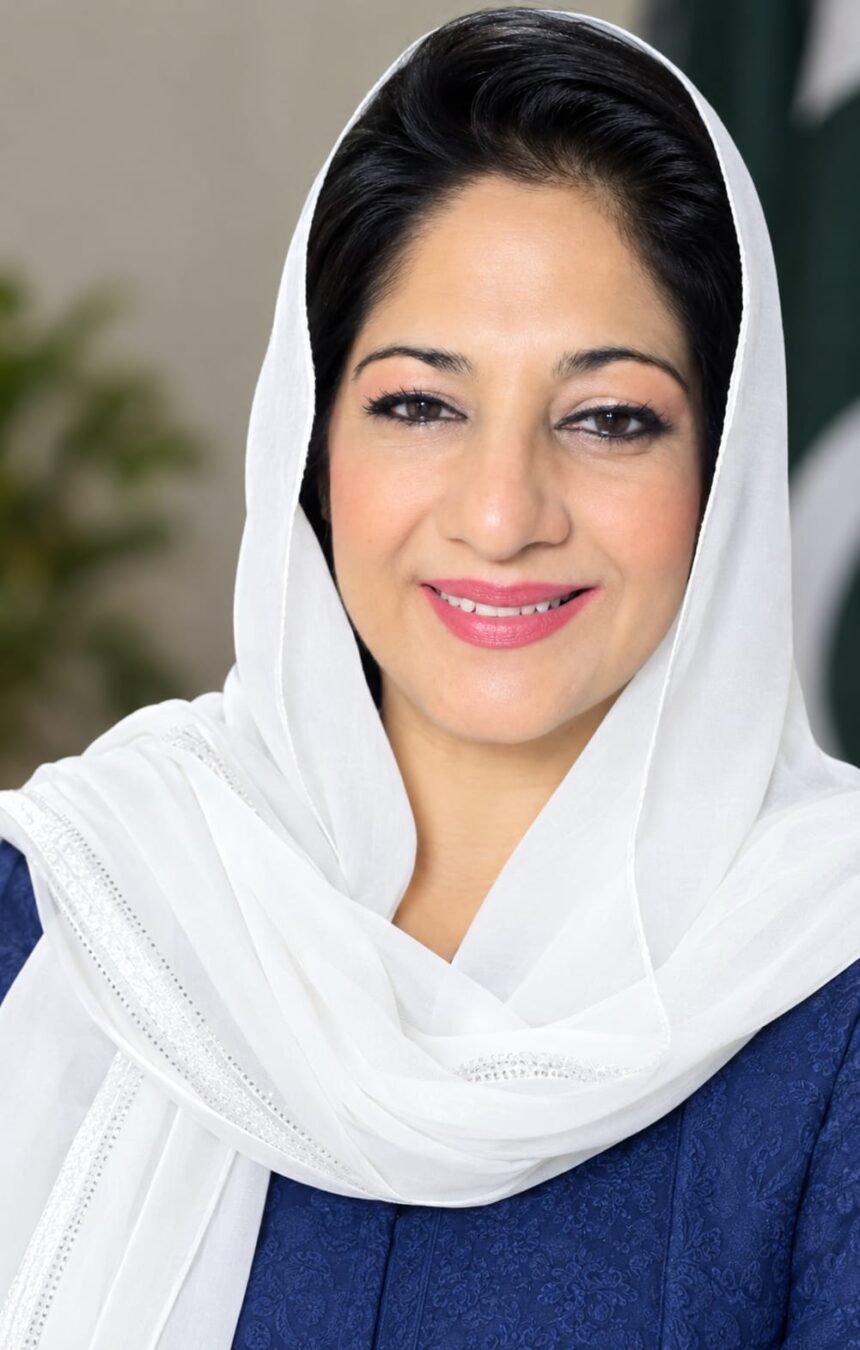
By: Ms Sumblina Hassan
Secretary to Shaheed Mohtarma Benazir Bhutto
Former Consultant to the Foreign Office, Islamabad
In charge of Office 10, UK, RCC, Bilawal House
Published By: ANI News Agency
To destroy a civilization without one bullet being fired, the answer to this question is without an army. If we were to suppose that no army would bomb, invade or cross the border, but instead we teach our nation to simply be ashamed of everything that made their civilization great. And then I’d wait. In other words, one can conquer a nation without defeating its army.
It is said that a Polish poet in 1953 wrote a book called The Captive Mind. He describes something extraordinary, and he maintains that whilst witnessing the Soviet domination of Eastern Europe, a meeting took place in a typical town hall by communists who addressed the ordinary citizens.
These men were highly trained in the arguments of Marxism, and their appearance was not arbitrary. Their convictions, goals and their main purpose was to explain with great confidence why the old order was rotten, and why their ideology was superior, which meant that science and history were on their side.
The people listening felt something was off, and they sensed instinctively that something precious was taken from them. The people couldn’t comprehend or articulate why they had this disposition. Therefore, convincing them that they deserve to be destroyed was easy, as they never learnt to defend their virtues. So, in hindsight, they’ll do the demolition themselves.
Hence, when challenged with the foundations of our civilisation, our system of governance and our constitution, can we retain it and explain why it has to survive? Can our children take the torch of its light and guard it, thereby ensuring its prosperity?
Recent protests erupting in Pakistan involving Tehreek-e-Insaf, condemning our government’s actions in declaring a state of emergency against the Pakhtunkhwa and Balochistan peoples,one begs the question: are our people out to destroy the light of prosperity and falling victim to violence against themselves?
On April 14, 1996, a powerful bomb exploded at the Shaukat Khanum Memorial Cancer Hospital in Lahore. This occurred when Imran Khan was to launch his political movement. Following the blast, Prime Minister Benazir Bhutto personally visited the targeted facility. My point is that despite being an adversary, she implied that even when on opposing sides, she maintained mutual respect. And, as recently, with the feud of Tehreek-e-Insaf’s convictions of malpractice against the government, our Chairman Bilawal Bhutto urges the opposite for an open political dialogue, as it is vital for a healthy functioning democracy. But his standpoint was completely ignored.
It is fundamental that there has to be a strategic importance of unity. A unified Pakistan provides structural advantages that individual provinces cannot sustain on their own.
With economic independence, the provinces rely on each other’s resources. Punjab acts as the agricultural breadbasket; Sindh provides crucial port access and the financial infrastructure. Balochistan possesses massive untapped mineral wealth and natural gas. Khyber Pakhtunkhwa holds hydroelectric potential and strategic trade routes into Central Asia.
A fractured Pakistan means the creation of a massive power vacuum in an already volatile region bordering Afghanistan, Iran, India and China. A unified Pakistan allows for a stronger collective bargaining position on the international stage.
The government had to deploy heavy military operations in order to squash dissent, as Pakistan also faces multi-front security crises driven by cross-border terrorism around the Khyber Pass province. These regional instabilities have strained Pakistan’s relations with Afghanistan and have triggered historic heavy-handed constitutional interventions by the federal government.
Working with the government and with all parties is essential in order for Pakistan to have a future. If a political system is not allowed to evolve and move forward, and if it is not facilitated, then that will affect Pakistan’s future.