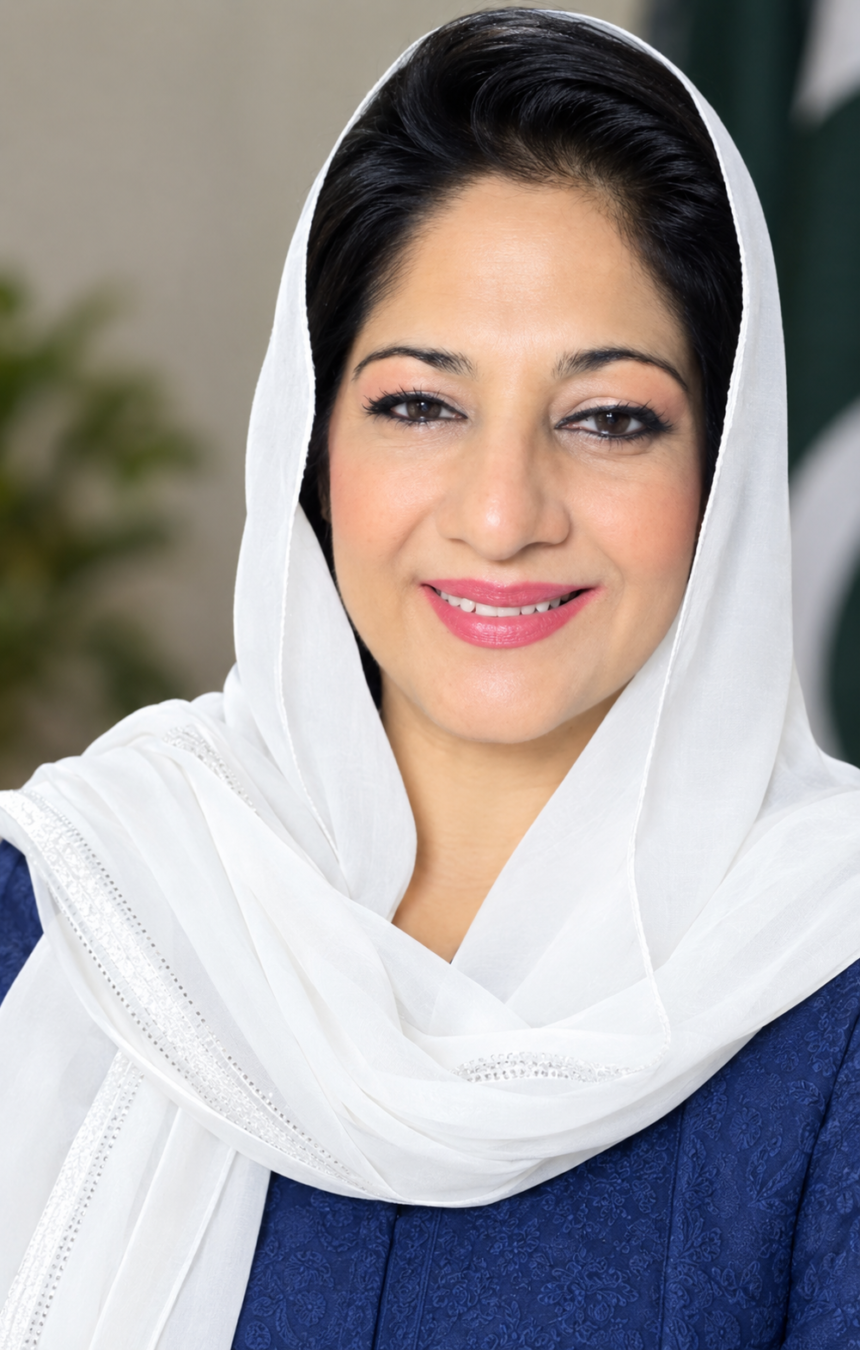
By:Ms Sumblina Hassan
Secretary to Shaheed Morthrama Benazir Bhutto
Former Consultant to the Foreign Office, Islamabad
In charge of Office 10, UK, RCC, Bilawal House
Published By: ANI News Agency
Pakistan’s political future depends not only on who holds political office, but also on whether the country is able to establish a democratic culture in which the rule of law, institutional responsibility and the mandate of the people are respected.
In my view, the starting point of any democratic system must be the respect for the vote. When citizens elect their representatives, they give them a mandate to govern within the Constitution and the law. That mandate should be respected by every institution of the state and by every section of society.
This does not mean that an elected government should be above accountability. Quite the opposite: an elected government must remain answerable to Parliament and to the people. But accountability should take place through constitutional, legal and democratic mechanisms rather than through attempts to influence or control the political process from outside the elected parliamentary framework.
Respecting the Mandate of the People
The rule of law is meaningful only when it applies consistently to everyone. In a democratic state, every institution has a role, and every role carries both authority and responsibility.
The judiciary, armed forces, bureaucracy, technocrats, police, business interests, landowners and other influential groups may all have important roles in national life. But none should use its influence, authority or institutional power to determine the political direction of the country in place of those who have received a public mandate through elections.
The elected government should be allowed to govern, while Parliament should remain the principal forum for political debate, legislation and accountability.
This is not an argument against institutional oversight. Institutions must continue to perform their constitutional responsibilities and ensure that the state functions according to law. It is an argument for institutional balance: each institution should perform its own responsibilities without unnecessarily interfering in the responsibilities of another.
A democracy becomes stronger when the boundaries between institutions are clear.
Parliament and Healthy Debate
Parliament is where elected representatives come together to debate the future of the country. Political disagreement inside Parliament is not a problem in itself. It is part of democracy.
A healthy parliamentary debate allows different political positions to be heard, examined and challenged. Government members can defend their policies, while opposition members can question decisions and present alternatives.
The purpose of debate should ultimately be to improve governance and serve the public interest.
Members of Parliament also have a responsibility to understand the office to which they have been elected or appointed. Public office is not simply an opportunity to exercise influence; it is a responsibility towards the people.
Every minister should therefore be accountable primarily for the ministry entrusted to him or her. If the Minister of Finance or Treasury has a matter of national concern, that matter should be presented before the House, explained transparently and defended through parliamentary debate.
The same principle should apply to every ministry.
When ministers clearly explain the work, performance, difficulties and decisions of their respective departments, Parliament can hold them accountable in an organised and meaningful manner.
This creates a transparent chain of responsibility: the public knows who is responsible, Parliament knows whom to question, and the government has an opportunity to explain its decisions.
Institutions Must Respect Their Constitutional Space
The strength of a state does not come from one institution controlling the others. It comes from institutions performing their responsibilities effectively within the constitutional framework.
The judiciary has its role. The armed forces have their responsibilities relating to national defence and security. The bureaucracy administers the state. The police maintain law and order. Parliament legislates and exercises oversight, while the elected government is responsible for governing and implementing policy.
These roles are interconnected, but they are not interchangeable.
When an institution uses its authority to influence political competition or the political landscape beyond its defined responsibility, the distinction between governance and institutional intervention can become blurred.
In my view, Pakistan needs greater respect for these institutional boundaries. The objective should not be to weaken any institution. Rather, it should be to ensure that every institution becomes stronger by performing its own responsibilities within the law.
A strong judiciary should be able to perform its judicial role. A strong military should be able to focus on national defence. A strong bureaucracy should administer government policy professionally. And a strong Parliament should be able to debate, legislate and hold the executive accountable.
Institutional strength and democratic strength should complement one another, not compete with one another.
Government and People: A Democratic Partnership
The relationship between government and citizens should not be understood simply as one of authority and obedience. It is a democratic partnership.
The people provide the mandate through their vote, while the government has a responsibility to use that mandate for public welfare.
Citizens, however, are not required to remain silent after an election. They retain the right to question government decisions, criticise policies and express dissatisfaction through lawful democratic channels.
If people are unhappy with the performance of their government, there must be constitutional mechanisms through which they can express that dissatisfaction and ultimately determine the political future of their representatives.
Elections are the principal democratic mechanism for this purpose. Where the Constitution provides for a referendum on a matter of national importance, that mechanism can also be used according to the constitutional procedure. Under Pakistan’s constitutional framework, a referendum on a matter of national importance can be initiated through the procedure provided in Article 48.
The essential principle is that the people should remain the ultimate source of democratic political authority.
Accountability Must Remain Within the System
Accountability is essential to democracy, but accountability should not become a substitute for democratic government.
An elected government should be questioned in Parliament. Ministers should explain their policies. Government spending should be scrutinised. Opposition parties should challenge decisions. Parliamentary committees should examine government performance.
These processes are not obstacles to governance; they are part of governance.
The National Assembly itself describes Parliament as a body that represents the will of the people and exercises oversight over the executive through debates, questions and committees.
The more effectively these constitutional mechanisms function, the less space there is for political disputes to be settled through confrontation outside institutional processes.
Political Differences Should Not Become Institutional Conflict
Pakistan will continue to have political differences. Different parties will have different ideas about economic policy, social development, foreign relations and governance.
That is normal.
The real challenge is to prevent political competition from becoming a conflict between institutions.
Political parties should compete for public support. Governments should defend their policies. Opposition parties should scrutinise them. Citizens should make their own judgments through democratic participation.
Institutions, meanwhile, should continue performing the responsibilities assigned to them by law.
This division of responsibility can help reduce uncertainty and create a more predictable political environment.
Stability Requires Respect for Democratic Process
Political stability does not mean the absence of criticism or disagreement. It means that disagreements can be managed without undermining the functioning of the state.
Pakistan’s economic and social challenges require continuity of attention. Inflation, employment, education, healthcare, energy and investment cannot be treated as secondary issues whenever political tensions increase.
The public ultimately wants government to work.
Businesses need predictability. Workers need economic opportunities. Families need access to essential services. Young people need education and employment prospects.
Political leadership must therefore recognise that prolonged confrontation can divert attention from the issues that directly affect citizens.
Dialogue provides an alternative.
Dialogue does not mean that political parties must surrender their principles. It means that differences can be discussed through recognised democratic channels rather than being allowed to develop into permanent confrontation.
The Responsibility of Political Leadership
Political leadership is ultimately a responsibility to the people.
The government must govern. The opposition must scrutinise. Parliament must debate. Institutions must perform their constitutional functions. And citizens must retain the right to question and change their representatives through lawful democratic processes.
No political party can claim ownership of democracy. Democracy belongs to the people.
Political parties may disagree strongly, but they share an interest in ensuring that the democratic system remains functional and credible.
Similarly, institutions may have different responsibilities, but they share an interest in ensuring that the Constitution and rule of law remain the foundation of the state.
Pakistan’s Democratic Future
Pakistan does not need a political system without disagreement. It needs a political system capable of managing disagreement responsibly.
In my view, the way forward is clear: respect the vote, respect the Constitution, respect Parliament and respect the defined responsibilities of every institution.
An elected government should be allowed to govern within the law. Parliament should provide the forum for healthy debate and accountability. Ministers should answer for their respective portfolios. Institutions should perform their own constitutional responsibilities without attempting to control the political process.
And when citizens are dissatisfied, they should have the lawful democratic means to express that dissatisfaction and determine the future of their government.
Government and people ultimately work within the same democratic framework. The government derives its mandate from the people, while the people retain the power to question, scrutinise and, through constitutional processes, change their representatives.
This partnership can create the foundation for greater political stability and national prosperity.
The future of Pakistan should therefore not be defined by institutional confrontation or political rivalry alone. It should be defined by the ability of its democratic institutions, elected representatives and citizens to work within the rule of law.
A democracy is strongest when no institution seeks to become greater than the constitutional system itself, when Parliament can debate freely, when governments remain accountable and when the people remain at the centre of political authority.
That is the democratic balance Pakistan needs for a stable, responsible and prosperous future.