By Ahmed Shamsur Rehman / ANI
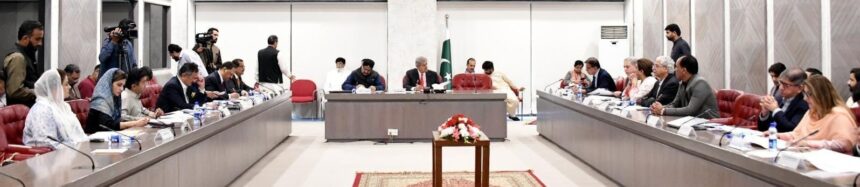
ISLAMABAD — The National Assembly Standing Committee on Finance and Revenue, chaired by Syed Naveed Qamar, reviewed Pakistan’s Extended Fund Facility (EFF) Programme with the IMF, fiscal reforms, energy-sector measures, privatization, SOE governance, climate commitments and austerity measures at Parliament House.
The Chairman stressed that fiscal consolidation should be supported by a transparent and sustainable economic strategy while promoting investment, exports, employment and economic growth. Members said IMF reforms should be assessed not only against formal benchmarks but also through measurable economic and social outcomes.
The Finance Division briefed the Committee that the $7 billion EFF Programme was approved on September 25, 2024, with approximately $4.5 billion disbursed and three reviews completed. Members also examined revenue mobilization, provincial fiscal positions, social-sector spending and the retailer tax-registration scheme.
The Committee reviewed the proposed privatization of Distribution Companies (DISCOs), with officials stating that three entities were at an advanced stage with international investor interest. Members sought clarity on transaction structures, assets, liabilities and proposed terms.
The proposed transaction involving Pakistan International Airlines (PIA) was also discussed. Officials reported a net asset position of around Rs9 billion after restructuring and said the Government was considering a transaction involving 75 percent ownership. Members sought detailed financial information on valuation, liabilities and proceeds.
The Committee further reviewed climate reforms under the Resilience and Sustainability Facility, energy-sector reforms and public-sector austerity measures, including a 50 percent temporary reduction in fuel provision for official vehicles and a 5 percent cut in the non-ERE budget for FY2026–27, estimated at Rs16.1 billion.
The Committee called for outcome-based reporting on IMF benchmarks, revenue measures, energy reforms, privatization, climate commitments and austerity savings. It also deferred agenda items concerning the CSR Bill, 2026 and PIAHCL after expressing displeasure over the absence of the SECP Chairman and inadequate presentations by concerned officials.